
Stem Cell Therapy
Stem cell therapy is an innovative treatment option for dogs with osteoarthritis
Stem Cell Therapy at Donaldson's Vets
Stem cell therapy is an innovative treatment option for dogs with osteoarthritis and degenerative joint disease, particularly where the response to conventional treatments has been disappointing. It may be considered alongside other treatments, such as medication, weight management, physiotherapy and, where appropriate, surgery.
What are stem cells?
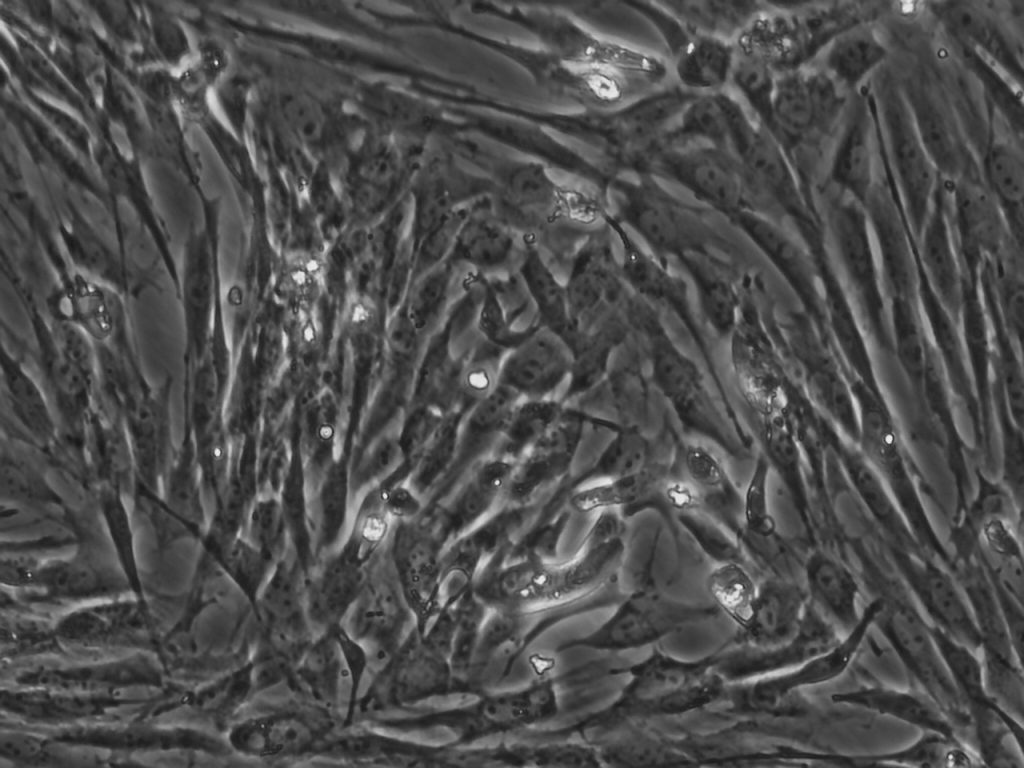
Stem cells are unspecialised precursor (early) cells found in animals’ tissues, including fat and bone marrow. They are unique because they have regenerative and anti-inflammatory properties and can develop into specialised cell types.
For stem cell therapy, we use mesenchymal stem cells (MSCs), which are collected from your pet’s own tissues. A small sample of fatty tissue and a blood sample are collected and sent to a specialist laboratory, where the MSCs are isolated, cultured and multiplied to produce a treatment tailored to your pet. Each injection contains millions of these cells.
How can stem cell therapy help an arthritic joint?
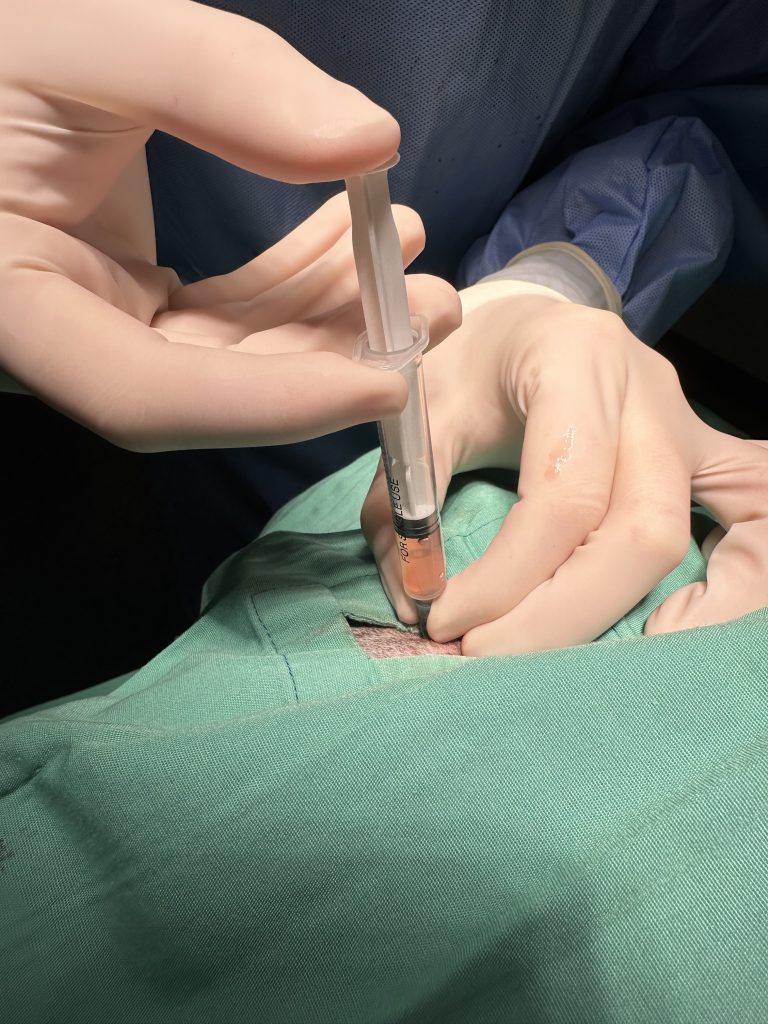
When stem cells are introduced into an arthritic or damaged joint, they can help support the body’s natural repair processes and may reduce inflammation within the joint. This process is known as tissue regeneration.
Stem cell therapy offers an additional treatment option for osteoarthritis and joint degeneration when conventional approaches, such as medication, physiotherapy or surgery, have not provided the desired level of improvement.
Around 80% of dogs may show a marked clinical improvement following stem cell therapy. Improvements can include:
- Increased activity and willingness to exercise
- Reduced pain and stiffness
- Improved mobility
- Reduced reliance on medication
- Improved overall quality of life
The response varies between individual patients, and stem cell therapy cannot guarantee an improvement in every case.
What happens if you choose stem cell therapy for your pet?
Your pet will initially have a thorough consultation and clinical examination at Somerset Road Hospital. Our veterinary team will discuss your pet’s history, current treatment and suitability for stem cell therapy, as well as any further diagnostic tests that may be required.
It is important that any other underlying health conditions are identified and appropriately managed before treatment. Depending on your pet’s age and medical history, further investigations may therefore be recommended before proceeding.
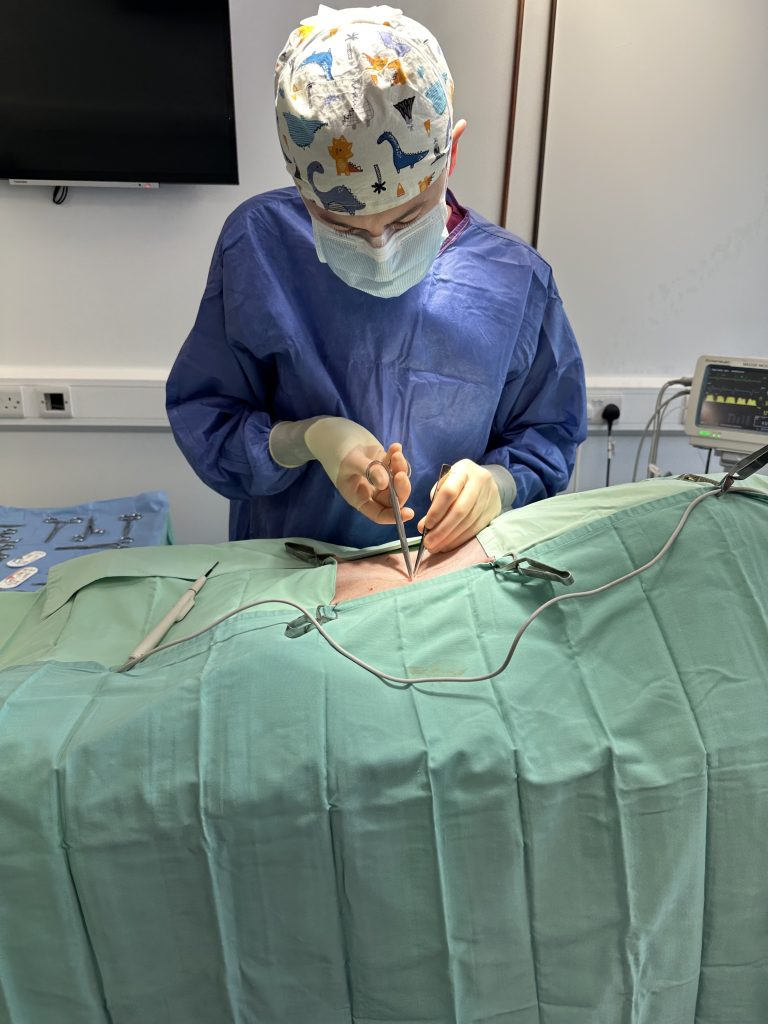
If stem cell therapy is considered appropriate, a small amount of fatty tissue is collected, usually from the falciform fat (near the liver), along with a blood sample. This is a relatively straightforward procedure performed under a general anaesthetic.
The samples are sent to a specialist laboratory, where the MSCs are isolated, cultured and multiplied. The cells are also tested to ensure that the resulting stem cell product is suitable for treatment. The laboratory process generally takes approximately 3–5 weeks.
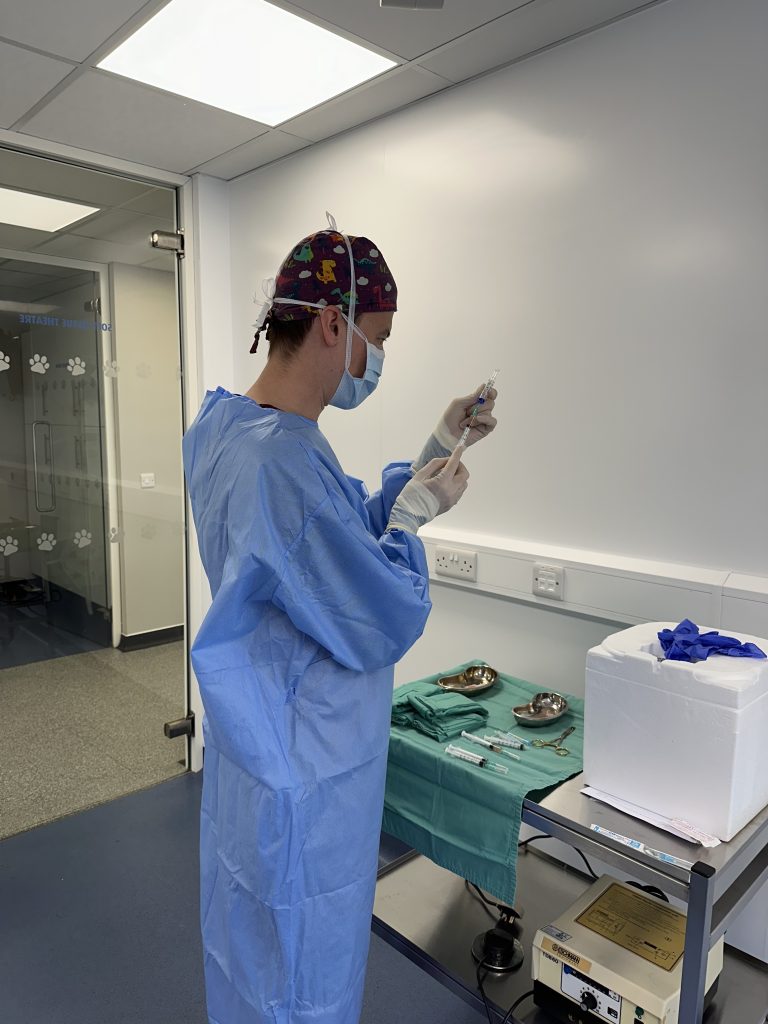
Once the cultured stem cells are ready, they are returned to Somerset Road Hospital under controlled conditions. The cells can then be injected directly into the affected joint or joints. These stem cells are also combined with Platelet Rich Plasma (PRP), which is made from the animals own blood. These platelets release a range of growth factors involved in tissue repair, creating a supportive biological environment for the MSCs to work in.
What happens after treatment?
Following the stem cell injection, your pet will generally need to be rested for 2–3 days before gradually returning to normal activity, according to the advice of our veterinary team.
A small proportion of dogs may experience a temporary increase in lameness or discomfort following the injection. This can last for up to approximately two weeks and should be discussed with our veterinary team if you have any concerns.
It can take up to 8 weeks before the full effects of treatment become apparent. The degree and duration of improvement varies between patients.
How long does treatment last?
Stem cell therapy is a relatively new treatment, so the long-term duration of its effects can be difficult to predict. Clinical studies have demonstrated significant improvement in dogs for at least six months following treatment. Most patients however experience positive affects for 12-16 months.
Repeated injections, depending on response are generally considered 12-16 months post first treatment. A sample of your pet’s stem cells can be retained by the laboratory for potential future use. If further treatment is required, a second fat collection is not necessary, although a further blood sample may still be required.

Is stem cell therapy suitable for every dog?
Not every dog with osteoarthritis will be suitable for stem cell therapy. Your pet’s individual circumstances, the severity and location of their joint disease, overall health and response to previous treatments will all be considered.
Our veterinary team at the Somerset Road Hospital will discuss the potential benefits, limitations, risks and expected costs with you before you decide whether to proceed.
If you would like to discuss whether stem cell therapy could be appropriate for your pet, please contact our Somerset Road Hospital to arrange a consultation.