
Ultrasound Scanning
At all our surgeries we use digital ultrasound technology to provide safe, accurate, and non-invasive diagnostic imaging for dogs and cats. Ultrasound allows us to visualise your pet’s internal organs in real-time, helping us diagnose a wide range of conditions quickly and comfortably – often without the need for sedation or anaesthesia.
What is an Ultrasound?
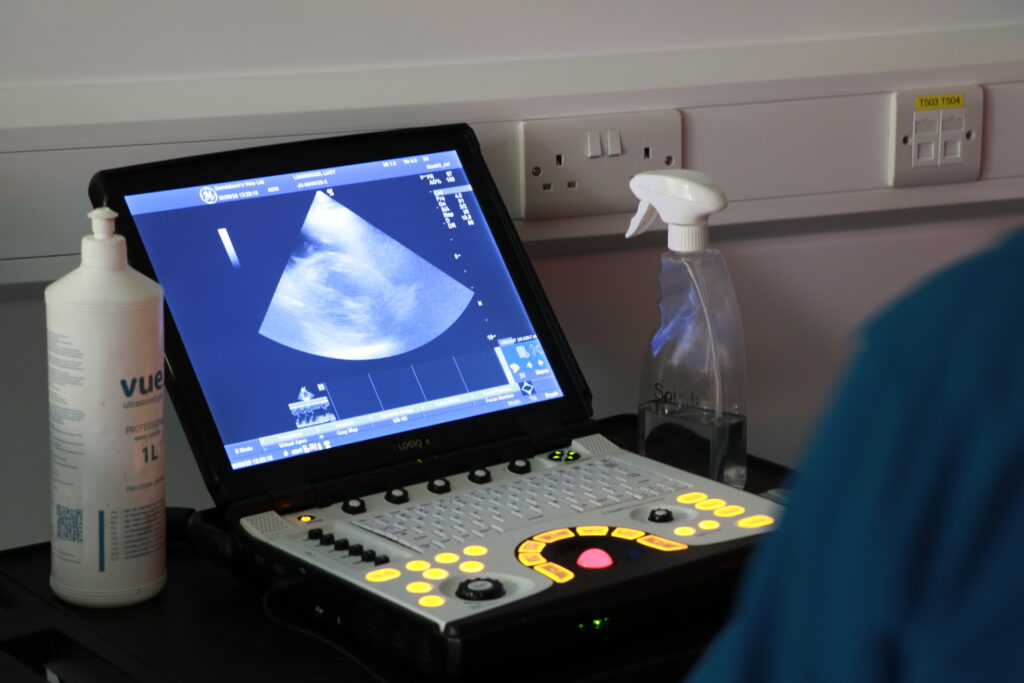
Ultrasound imaging works by sending high-frequency sound waves into the body. These waves bounce back to create a live image of your pet’s internal structures, displayed on a monitor.
When do we use Ultrasound?
Ultrasound helps us investigate a variety of health concerns, including:
● Heart murmurs or irregular heartbeat
● Vomiting, diarrhoea, or suspected foreign objects
● Liver or kidney disease
● Bladder or urinary issues
● Lumps, growths, or swelling
● Soft tissue and tendon injuries
● Pregnancy detection and monitoring
Common Ultrasound applications
Common Ultrasound Applications
Dog & Cat Abdominal Scans assess internal organs such as the liver, kidneys, spleen, intestines, and bladder for conditions like:
● Tumours
● Infections
● Blockages
● Inflammation
Pregnancy Scanning
● Can only be performed from 28 days post-mating.
Please Note: We do not provide puppy counts during pregnancy scans, as it’s difficult to determine exact numbers accurately. Factors like foetal resorption, overlapping images, movement, and the limitations of scanning the entire uterus can lead to miscounts or double counting. Ultrasound is used to confirm pregnancy or to assess foetal distress in labour.
Heart Ultrasound (Echocardiography)
Used to examine:
● Heart murmurs
● Valve abnormalities
● Heart disease progression
● Cardiac function and structure
Bladder & Urinary Tract Imaging
Used to detect:
● Bladder stones
● Tumours
● Infections
● Urethral blockages
Gastrointestinal & Digestive Scans
Helps identify:
● Intestinal blockages
● Inflammation
● Abnormal growths or foreign bodies
Ultrasound-Guided Procedures
We may use ultrasound to guide:
● Needle biopsies
● Fluid drainage from organs or swellings
What to Expect During Your Pet’s Ultrasound
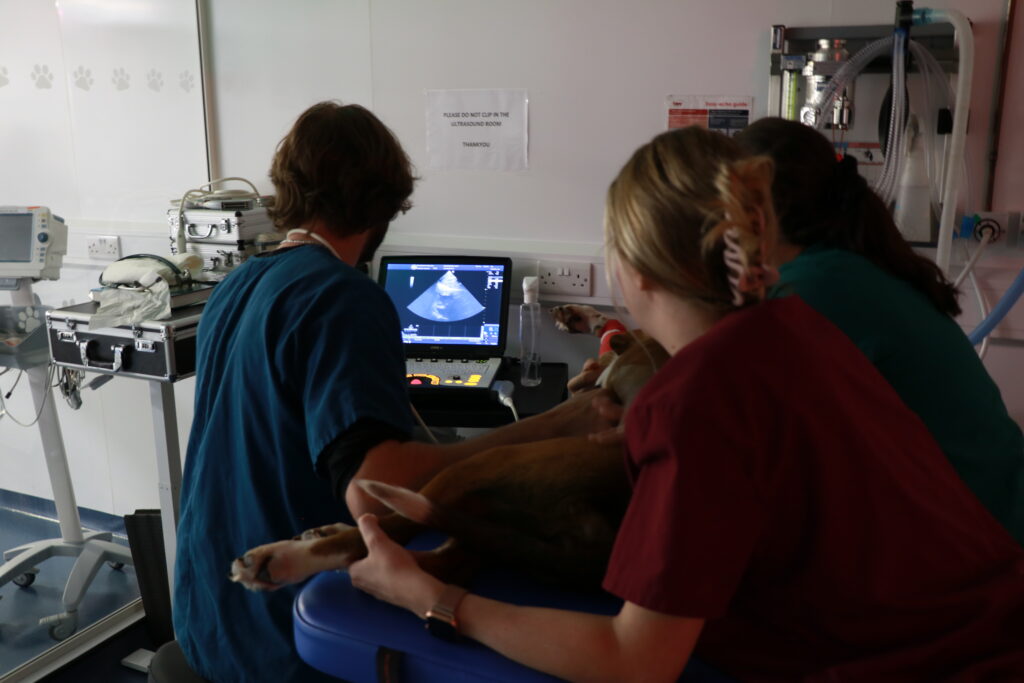
● Some pets tolerate the scan while awake
● No pain is involved
● Sedation may be used if needed
● Fur is clipped, and gel is applied to the area
● The scan typically takes 20–40 minutes.
If your pet is showing symptoms or your vet has recommended further investigation, an ultrasound can offer valuable insight—safely and efficiently.
Contact us today to book a consultation or ask about our ultrasound services.
Want to know more or book in for ultrasound
Phone your local branch for more information, or for a chat about the procedure